

The Best Alarm Tone: What Makes a Good Wake-Up Sound, and How to Choose One
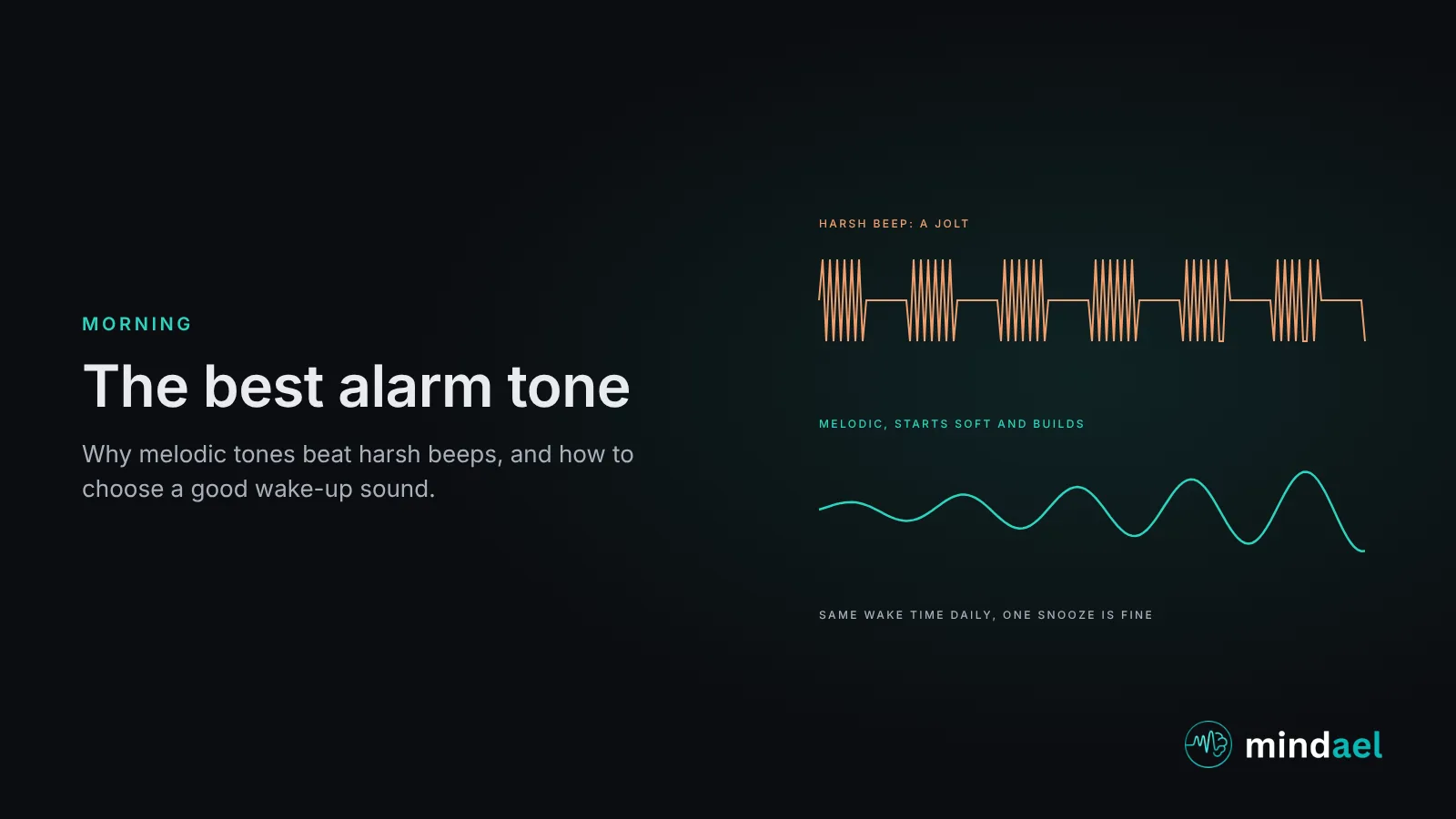
The best alarm tone is one that wakes you reliably without a jolt. In a study of the sounds people wake to, those who rated their alarm as melodic reported less morning grogginess, while plain, neutral beeps were linked with more. Grogginess after waking, called sleep inertia, is worst when an alarm pulls you out of deep sleep or after a short night, so the tone is only part of the answer: a regular wake time and enough sleep matter more. A good alarm tone is melodic, starts soft and builds, sits in a mid pitch range rather than a piercing one, and is distinct enough that you notice it. One snooze is fine; in a study of habitual snoozers, up to 30 minutes of snoozing did not worsen sleep or mood. For important mornings, keep a second alarm as a backup.
The best alarm tone does one job well: it gets you up on time without making the first minutes of the day worse. The sound you choose makes a real, if modest, difference. This guide explains what research says about alarm tones, what makes a good one, and how to set it up. We make Mindael, a sleep and wake sound app, free to download on the App Store.
Melodic beats harsh
In a study of the sounds people wake to, those who rated their alarm as melodic reported less grogginess in the morning, while plain, neutral beeps were linked with more (McFarlane et al., 2020). It was a small, self-reported study, so treat it as a nudge, but switching tones costs nothing.
What makes a good alarm tone
- Melodic. A tune or a gentle sequence of notes, not a repeating beep.
- Starts soft and builds. A tone that rises gives you a few seconds to surface instead of a jolt.
- Mid pitch. Piercing high tones are harsh; very low ones are easy to sleep through.
- Distinct. It should not sound like a notification you hear all day, or you will start to ignore it.
- Loud enough, not more. Test it from bed at the volume you will use.
The tone is not the whole story
Morning grogginess, called sleep inertia, is worst when the alarm pulls you out of deep sleep and after a short night, because sleep loss increases deep sleep (Tassi and Muzet, 2000). A regular wake time, weekends included, and enough sleep matter more than any sound. Our cycles of sleep guide explains why some mornings are worse than others, and a sunrise alarm adds light to the sound.
Snooze, honestly
One snooze is fine. In a study of habitual snoozers, up to 30 minutes of snoozing did not worsen sleep, stress hormones or mood, and people were slightly sharper on some tests right after rising (Sundelin et al., 2023). Many snoozes every day usually mean the alarm is earlier than your sleep allows.
Loud alarm, soft alarm or song?
A loud, harsh alarm will wake you, and that is its only strength. The jolt feels bad, and many people learn to silence it half asleep. Keep one as a backup on important mornings, not as your daily sound.
A soft, melodic alarm is the better daily choice if it reliably wakes you. Test it properly: set it for a nap or a weekend morning before you trust it on a workday.
A song works because it is melodic and you like it. Two cautions. Pick one with a calm opening, since a track that starts at full volume is just a harsh alarm with a tune. And expect to change it every few weeks, because a song you wake to every day can stop registering, or stop being a song you enjoy.
Nature and ambient sounds such as birds, rain or soft chimes sit between the two. They are gentle, and they work best for light sleepers and for people who already wake close to their alarm time.
The best alarm tone for heavy sleepers
If you sleep through gentle alarms, the answer is rarely a harsher sound alone. Try these in order:
- A melodic tone that builds to a high volume over 30 to 60 seconds, so it starts soft but does not stay soft.
- Distance. Put the phone across the room so you have to stand up to stop it.
- Light. Open the curtains as soon as you are up, or use a sunrise alarm that brightens before the sound.
- A second alarm five minutes later with a different sound, in case you silence the first without waking.
- More sleep. Sleeping through alarms most days usually means the night is too short. An earlier bedtime does more than any tone; our guide on how to fall asleep fast can help with that end of the night.
Common alarm mistakes
- Using your ringtone or a notification sound. You hear it all day, so it stops meaning “wake up”, and hearing it elsewhere becomes unpleasant.
- Maximum volume from the first second. A sudden blast is the jolt you are trying to avoid.
- A different wake time every day. The body clock adapts to a regular time, and waking gets easier when it does.
- Five alarms in a row. Each one fragments the last half hour of sleep. One alarm and one snooze is plenty.
- Keeping the phone in bed. It is too easy to stop the alarm without waking.
Set it up
On iPhone, open the Clock app, tap Alarms, tap the alarm, then Sound, and pick a melodic tone or a calm song. Mindael’s wake sounds, Rainy Morning, Crystal Dawn and Zen Wake, are gentle wake-up sounds rather than beeps. For a flight or an exam, set a second alarm in the built-in Clock app as a backup. Our best alarm app checklist covers the rest.
The short version
Choose a melodic alarm tone that starts soft and builds, in a mid pitch, distinct from your notifications. Keep a regular wake time, allow yourself one snooze, and use a backup for important mornings. For gentle wake-up sounds and calm sounds for the night before, Mindael is free to download on the App Store, and our morning guide has more.
Wake to a sound, not a beep.
Mindael has gentle wake-up sounds, Rainy Morning, Crystal Dawn and Zen Wake, alongside rain and ocean recorded without loops and brown noise generated to spec for the night before. Free to download, no account, works offline.
- Gentle wake-up sounds, not beeps
- Rain, ocean and brown noise for the night before
- Free to download, no account, works offline
 Free · No account needed · Works offline
Frequently asked questions
What is the best alarm tone to wake up to?
A melodic one that starts soft and builds. In one study, people who rated their alarm as melodic reported less grogginess than those who woke to plain beeps.
Are loud alarm tones bad for you?
A sudden loud beep is unpleasant and jolts you awake. There is no need for it if a softer, rising tone wakes you reliably. Keep a louder backup only for important mornings.
Should I use a song as my alarm?
A song you like can work well, since it is melodic. Choose one with a calm start, and change it if you stop noticing it.
Why do I feel groggy even with a nice alarm?
That grogginess is sleep inertia. It is worst after a short night or when the alarm catches you in deep sleep. A regular wake time and enough sleep help more than any tone.
Is snoozing bad?
A little is fine. In a study of habitual snoozers, up to 30 minutes of snoozing did not worsen sleep, stress hormones or mood. Constant snoozing usually means the alarm is earlier than your sleep allows.
How do I change my alarm tone on iPhone?
Open the Clock app, tap Alarms, tap the alarm, then tap Sound and pick a tone or song.
Sources
- McFarlane SJ, Garcia JE, Verhagen DS, Dyer AG. Alarm tones, music and their elements: analysis of reported waking sounds to counteract sleep inertia. PLOS ONE, 2020.
- Tassi P, Muzet A. Sleep inertia. Sleep Medicine Reviews, 2000.
- Sundelin T, Landry S, Axelsson J. Is snoozing losing? Why intermittent morning alarms are used and how they affect sleep, cognition, cortisol, and mood. Journal of Sleep Research, 2023.
This article is part of our morning and waking up guide. Hear the sounds in this article in the Mindael sound library, or see our app comparison checklists.