

Nervous System Regulation: What It Means, What the Vagus Nerve Does, and How to Do It Daily
"Regulate your nervous system" has become shorthand for feeling less wired, less flat and more able to come back to centre, and underneath the shorthand there is real physiology: a brake on the stress response, run largely by the vagus nerve, that can be measured and trained. This page explains what regulation means in plain terms, what the research has actually shown, and the handful of daily practices with evidence behind them, most of them breath and sound. Every sound here is in Mindael, free to download on the App Store, with guided breathing that runs on top of the sound.
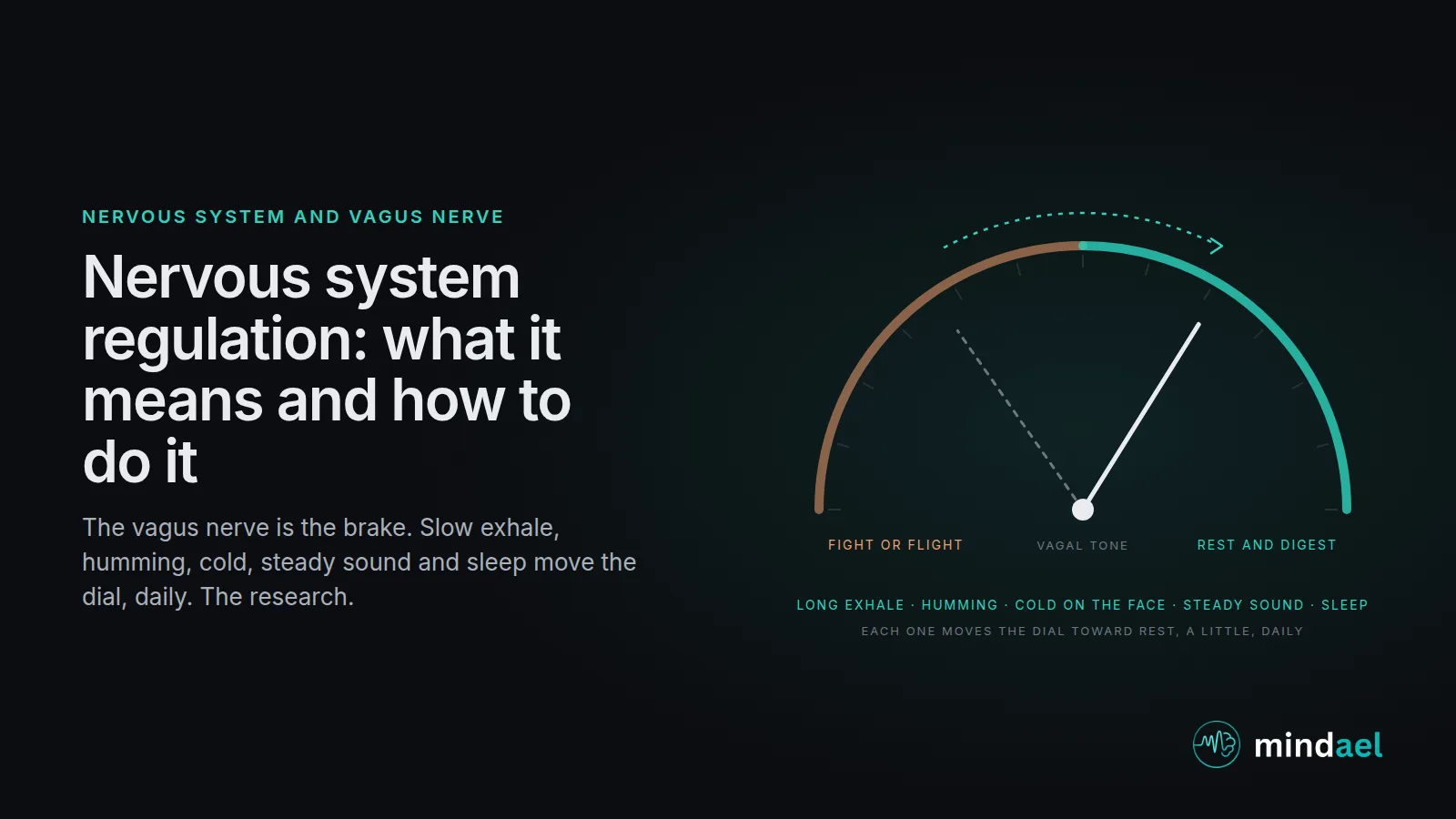
Nervous system regulation means being able to move between alert and at rest as the situation calls for, rather than sticking in fight-or-flight or in shutdown. The measurable part is vagal tone, read through heart rate variability: higher tone means a faster return to calm. It rises with slow breathing at about six breaths a minute with a long exhale, with humming and chanting, with cold on the face, with steady sound, sleep and movement, and it is trained by doing these daily, not by doing them once. A 'nervous system reset' is a few minutes of slow exhale under a steady sound; regulation is the habit.
Sounds that work, and why
Ocean waves
Calm waves break at about six a minute, the rate where the vagal brake is strongest. Breathe in on the draw, out on the break, and the pacing is done for you.
Brown noise
Deep and featureless. For a system stuck in alert, it removes the stream of small sounds that keep the threat detector busy, which is most of what 'feeling safe in a room' means.
Rain
Soft, varied and never startling. For the evening wind-down, when brown noise feels too heavy, rain gives the hum and the long exhale something to sit under.
174 Hz
A single low tone with nothing to anticipate. We make no claims for it beyond that; a nervous system on alert settles faster when the sound in the room never changes.
Alpha waves
A 10 Hz binaural beat with earbuds for the calm, awake state between wired and asleep. Use it after the breathing, for the twenty minutes of staying regulated.
What “regulated” means
The autonomic nervous system has two sides. The sympathetic side mobilises: heart up, breath fast and high, muscles braced, attention on threat. The parasympathetic side, carried mostly by the vagus nerve, does the opposite: heart down, digestion on, breath low and slow, attention wide. Neither is good or bad. A regulated nervous system is one that can go up when something needs doing and come back down when it is done. A dysregulated one sticks: in alert, so that you lie in bed at midnight with a racing heart over nothing; or in shutdown, flat and exhausted; or swinging between the two.
The vagus nerve is the hardware of the coming-down. It is the brake on the heart, and its tone, how firmly and quickly it can apply that brake, is measurable as heart rate variability, the small beat-to-beat changes in heart rate that track the breath. Higher variability means a more responsive brake. In a meta-analysis of neuroimaging studies, that variability tracked activity in the brain regions that regulate emotion and threat, which is why it is used as a marker of stress resilience and not just of the heart (Thayer et al., 2012). The polyvagal framework that gave the internet its vocabulary adds a social layer: the same vagal circuits that calm the heart also run the face, the voice and the middle ear, which is why a calm voice calms a room (Porges, 2007). Some of that framework is debated among physiologists; the vagal brake itself is not.
What actually moves the dial
Slow breathing with a long exhale. The best-evidenced practice by a distance. The vagal brake engages on the exhale and releases on the inhale, so a breath with a long exhale spends more of each cycle with the brake on, and at around six breaths a minute the breath rhythm lines up with the natural swing in blood pressure, which is where heart rate variability peaks (Lehrer and Gevirtz, 2014). A 2018 review proposed that this respiratory vagal stimulation is the common mechanism behind most contemplative practices, from meditation to yoga to prayer (Gerritsen and Band, 2018), and a systematic review the same year found slow breathing consistently raised vagal activity and lowered anxiety (Zaccaro et al., 2018). For the fast version, two physiological sighs, which produced the largest drop in arousal of four breathing practices in a 2023 randomised trial (Balban et al., 2023). Our breathing guide teaches the patterns, and the abdominal breathing article covers why the breath has to be low to work.
Humming, chanting, singing. The vagus runs through the larynx, and a sustained voiced exhale stimulates it from the inside. In a small imaging study, Om chanting produced deactivation in the amygdala and related regions similar to what is seen with electrical vagus nerve stimulation, and simple “sss” sounds did not (Kalyani et al., 2011). A low hum with the lips closed, on every exhale, for five minutes; or Om along with a sustained low tone such as 174 Hz in the app. It is the practice people are most embarrassed by and the one they can feel.
Cold on the face. Cold water on the face, or a cold pack on the forehead and cheeks, triggers the dive reflex, which slows the heart within seconds. A randomised trial found cold applied to the face and neck raised vagal activity measurably, where cold on the hands did not (Jungmann et al., 2018). Thirty seconds, with the breath slow. It is the quickest tool here and the one to use when the breath alone will not catch.
Steady sound, dim light, no surprises. A system on alert is scanning for change. A room where nothing changes, a low steady sound, dim light, the phone face down, gives it nothing to scan, and it stands down. Brown noise removes the small sounds; ocean adds a rhythm to breathe to; a low tone like 174 Hz sits between. The relaxing sounds guide goes through the options, and the anxiety guide puts sound and breath together for the evenings when alert will not switch off.
Movement, then rest. Regulation is the swing, not the stillness. Exercise raises the sympathetic side on purpose and then lets the vagal side practise bringing you back, and people who exercise regularly have higher resting heart rate variability. A brisk walk, then ten minutes of slow breathing, is a complete session.
Sleep. Short sleep lowers vagal tone the next day more reliably than almost anything else you do. The sleep sounds guide has the routine; a fixed bedtime is itself a regulating practice.
A daily practice, ten minutes
For the five-minute emergency version, when the system is wired right now, the how to calm your nervous system article puts the fast tools in order; this section is the daily practice that makes them less necessary, and the how to relax your nervous system article builds the slow evening around it.
Sit or lie down with ocean or brown noise at a low level. Two physiological sighs. Then four seconds in through the nose and six out, breathing low, for eight minutes, humming on the exhale for the last two if you like. Let the sound fade at the end. That is the whole practice, and it is the one the biofeedback research trains over four to eight weeks of daily sessions. Do it at the same time each day so the sound starting becomes the cue; after a couple of weeks, pressing play is itself the first exhale.
What it is not
Nervous system regulation is a skill, not a cure, and the vocabulary around it has outrun the evidence in places. There is no reset button, no single exercise that “tones the vagus” permanently, and no practice on this page that replaces treatment for anxiety, depression or trauma, all of which involve the same circuits and all of which have treatments that work. If you feel stuck in alert or in shutdown for weeks, see a doctor or therapist and bring these practices with you. They make the treatment easier, and they are, in the end, what a well-regulated day is made of: a long exhale, a steady sound, and a body that remembers how to come back.
How to set it up tonight
- Breathe out longer than you breathe inFour seconds in through the nose, six out, for ten minutes a day, under ocean or brown noise. This is the single best-evidenced practice on the page; everything else is a variation on it.
- Hum, or chant, on the exhaleA low hum, or Om, with the lips closed, for five minutes. The vibration stimulates the vagus through the larynx; brain imaging during Om chanting shows the same deactivation pattern as vagus nerve stimulation.
- Cold on the face for thirty secondsCold water on the face, or a cold pack on the cheeks and forehead, with the breath held or slow. The dive reflex slows the heart within seconds, which is the fastest reset there is.
- Make the room predictableA steady sound at a low level, dim light, the phone out of sight. A nervous system scanning for change cannot settle; remove the changes and it does.
- Move, then restA brisk walk or any exercise raises the alert side on purpose and lets the rest side practise coming back. Regulation is the swing, not the stillness.
- Protect sleep and do it dailyVagal tone is lowest after short sleep and highest in people who practise slow breathing for weeks. Same time every day, a fading timer, and the sound as the cue.
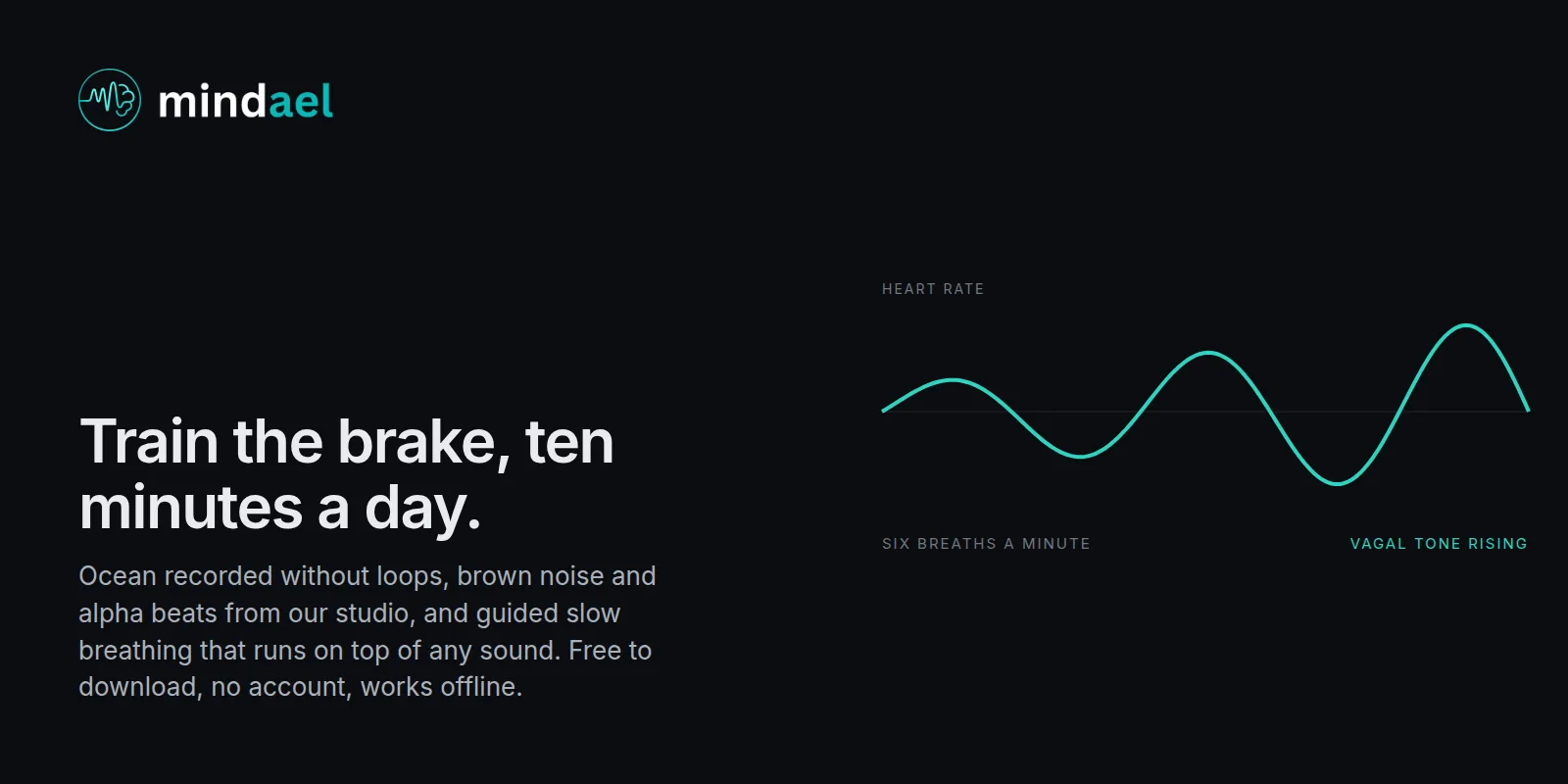
The brake, on demand.
Mindael has ocean recorded without loops to breathe with, brown noise and alpha beats made in our studio, low tones to hum along to, and guided slow breathing that runs on top of whichever sound you choose. Free to download, no account, works offline. Ten minutes a day, exhale longer than you inhale.
- Ocean, rain, brown noise, low tones and alpha beats, studio-made
- Guided slow breathing on top of the sound, timer that fades
- Free to download, no account, works offline
 Free · No account needed · Works offline
 Frequently asked questions
What does nervous system regulation mean?
The ability to shift between the alert, fight-or-flight side of the autonomic nervous system and the rest-and-digest side as the situation calls for, and to come back to rest once a stress has passed. The measurable version is vagal tone, read through heart rate variability: how readily the brake on the stress response engages.
What is a dysregulated nervous system?
A system that sticks: either stuck in alert, with a racing heart, shallow breathing, poor sleep and a short fuse, or stuck in shutdown, flat, numb and exhausted, or swinging between the two. It is a description, not a diagnosis; persistent versions overlap with anxiety, burnout and depression, which have treatments.
How do you regulate your nervous system fast?
Slow the exhale. Two physiological sighs, then four seconds in and six out for a few minutes, with a steady sound in your ears and, if you can, cold water on the face. That engages the vagal brake within a minute or two. The fast reset is real; the lasting change comes from doing it daily.
What is a nervous system reset?
Usually a few minutes of slow breathing, humming or cold that brings heart rate down and the body out of alert. There is no literal reset button, but the vagal brake can be engaged on demand, and that is what the phrase describes.
Does the vagus nerve really control calm?
It carries most of the rest-and-digest signalling between brain and body, and its tone, measured through heart rate variability, tracks how quickly people recover from stress and how well they regulate emotion. Slow breathing, humming and cold all raise vagal activity measurably. 'Toning the vagus' is a loose phrase for a real thing.
What sounds help regulate the nervous system?
Steady ones, at a low level, without words: ocean waves to pace the breath, brown noise to remove the room, a low tone, an alpha beat for the calm after. Humming or chanting along to a sustained tone adds the vagal stimulation of the voice itself.
How long does it take to regulate the nervous system?
Minutes for a single session to bring the body down. Weeks for the baseline to move: heart rate variability training studies run four to eight weeks of daily practice. If you feel stuck in alert or shutdown for months, talk to a doctor or therapist; the practices here help alongside treatment.
Sources
- Porges SW. The polyvagal perspective. Biological Psychology, 2007.
- Thayer JF, Åhs F, Fredrikson M, Sollers JJ, Wager TD. A meta-analysis of heart rate variability and neuroimaging studies: implications for heart rate variability as a marker of stress and health. Neuroscience and Biobehavioral Reviews, 2012.
- Gerritsen RJS, Band GPH. Breath of life: the respiratory vagal stimulation model of contemplative activity. Frontiers in Human Neuroscience, 2018.
- Lehrer PM, Gevirtz R. Heart rate variability biofeedback: how and why does it work? Frontiers in Psychology, 2014.
- Zaccaro A, et al. How breath-control can change your life: a systematic review on psycho-physiological correlates of slow breathing. Frontiers in Human Neuroscience, 2018.
- Kalyani BG, et al. Neurohemodynamic correlates of 'OM' chanting: a pilot functional magnetic resonance imaging study. International Journal of Yoga, 2011.
- Jungmann M, Vencatachellum S, Van Ryckeghem D, Vögele C. Effects of cold stimulation on cardiac-vagal activation in healthy participants: randomized controlled trial. JMIR Formative Research, 2018.
- Balban MY, et al. Brief structured respiration practices enhance mood and reduce physiological arousal. Cell Reports Medicine, 2023.
This page is for general information and is not medical advice. Feeling stuck in alert or shutdown for weeks overlaps with anxiety, burnout and depression, which are treatable; please talk to a doctor or therapist. People with heart conditions should ask a doctor before cold-water practices.