

Brown Noise: The Deep, Steady Sound for Sleep and Focus
Random noise, energy falls 6 dB per octave
15 second sample of the brown noise in Mindael, measured to fall 6 dB per octave.
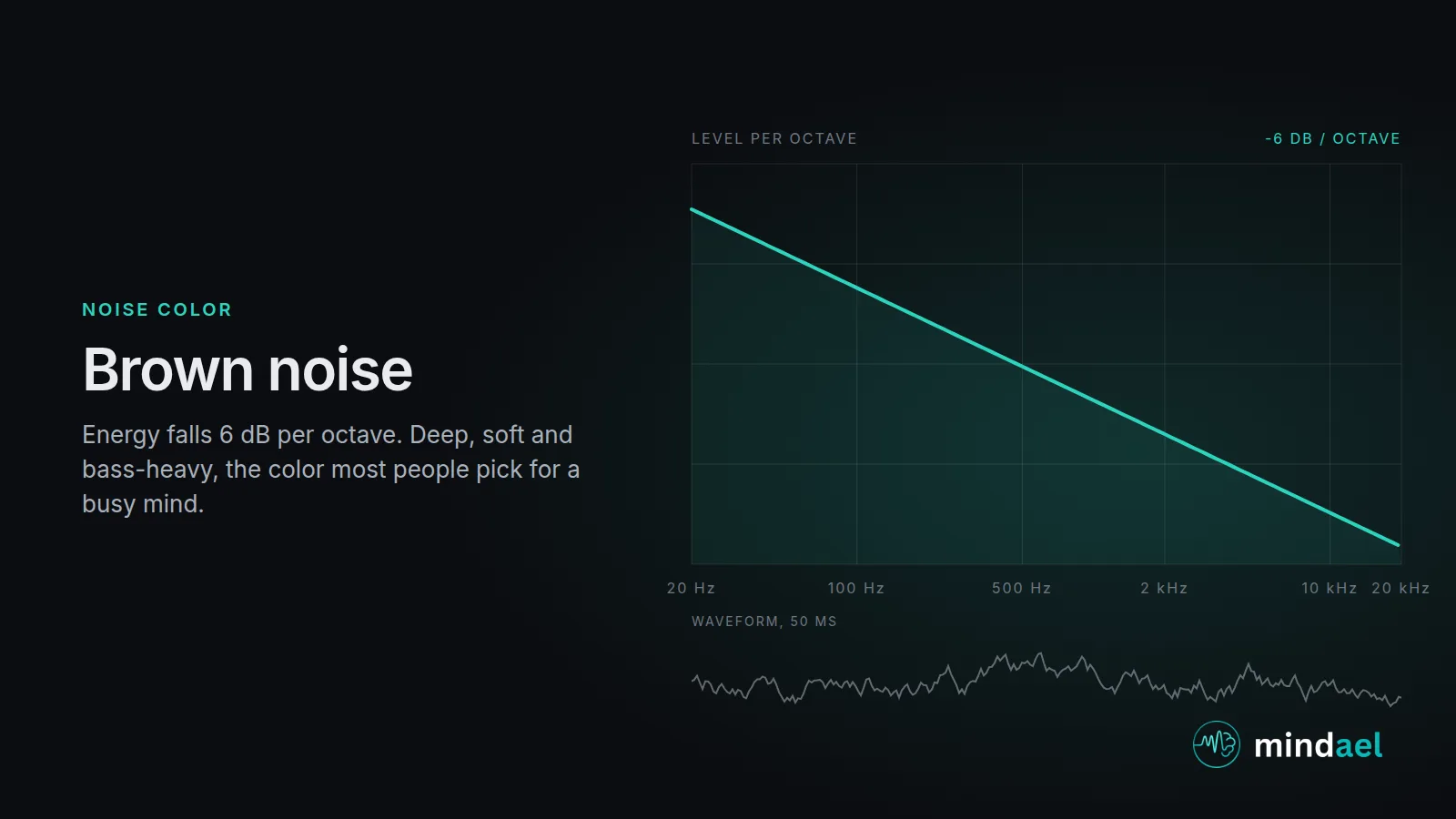
Brown noise is the deepest of the noise colors: a soft, low rumble like a distant waterfall, with almost no hiss. It is the sound most of our listeners keep on for hours, for sleep when the mind is loud and for work when the room is.
Choosing an app? See what the best brown noise app needs, or browse the full sound library.
What brown noise is
Brown noise is random sound with its energy concentrated in the low frequencies. Every time the pitch doubles, the level drops by 6 dB, so by the time you reach the frequencies of a hiss there is almost nothing left. What remains is a warm, physical rumble that tends to wrap around you instead of sitting in front of your attention. You can hear exactly that in Mindael, where the track is generated and measured in our studio rather than recorded from a fan.
When to use it
Sleep. Brown noise is the color we suggest when the room is quiet but your head is not. It is deep enough to feel like a presence, with nothing sharp to notice at 3 a.m. Keep it low and run it into a 60 to 90 minute fade, or all night at a whisper if you wake easily.
Focus. It sits exactly where voices, ventilation and traffic sit, so it blurs an open office without getting tiring. It is the sound more of our listeners work to than any other, usually for two or three hours at a stretch.
ADHD. Steady noise gives an under-stimulated brain the constant input it is looking for. The published studies used white and pink noise and found small, consistent gains in attention, strongest in people with more severe symptoms (Söderlund et al., 2007; Nigg et al., 2024). Brown is the version most adults can keep on all day, which is why it is the one they end up with.
How to listen
Low. Forty to fifty decibels, the level of a quiet conversation. A speaker across the room for sleep; headphones or a small desk speaker for work. Add a little rain on top if plain noise feels too heavy, or a delta beat underneath if you are using earbuds to fall asleep.
The full story, with the history, the research and the settings, is in our guide to what brown noise is.
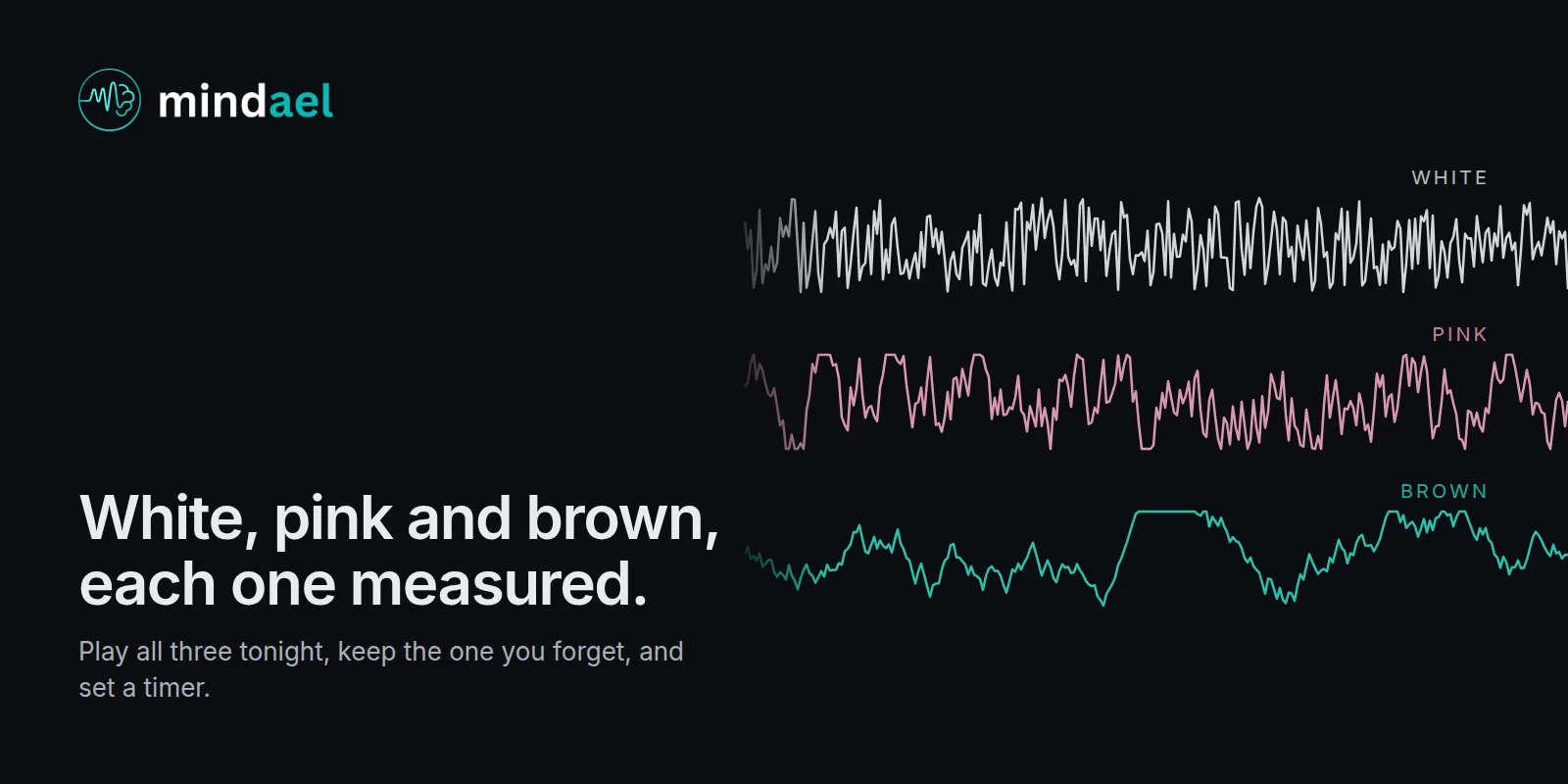
Brown noise that is actually brown.
Most brown noise online drifts off spec. The track in Mindael is generated in our studio and measured to fall exactly 6 dB per octave, so the depth you hear in the sample is the depth you get all night. Download it, set a timer, and let the room disappear.
- Studio-made, spectrum-measured brown noise
- Layer it with rain or a delta beat in two taps
- Sleep timer with a gentle fade, works offline
 Free · No account needed · Works offline
 Frequently asked questions
What does brown noise sound like?
A deep, soft rumble, close to a waterfall heard from a distance or surf on a far beach. There is almost no hiss, which is why people find it easier to live with than white noise.
Is brown noise good for sleep?
Yes, especially when the room is already quiet and the problem is a busy mind. It gives the brain a steady low floor to rest on. For a loud street, pink or white noise masks better.
How loud should brown noise be?
About the level of a quiet conversation, 40 to 50 dB. You should still hear someone speak to you. The masking works at low volume; louder only tires your ears.
Why is it called brown noise?
After the botanist Robert Brown and the Brownian motion he described in 1827. The same random-walk math produces this sound, which is why it is also called red or Brownian noise. It has nothing to do with the color.
Sources
- Söderlund G, Sikström S, Smart A. Listen to the noise: noise is beneficial for cognitive performance in ADHD. Journal of Child Psychology and Psychiatry, 2007.
- Nigg JT, et al. Systematic review and meta-analysis: do white noise or pink noise help with task performance in youth with ADHD or with elevated attention problems? Journal of the American Academy of Child and Adolescent Psychiatry, 2024.
- Messineo L, et al. Broadband sound administration improves sleep onset latency in healthy subjects in a model of transient insomnia. Frontiers in Neurology, 2017.
This page is for general information and is not medical advice.