

Green Noise: The Mid-Range Sound That Feels Like Being Outdoors
Noise centred on the mid frequencies, around 500 Hz
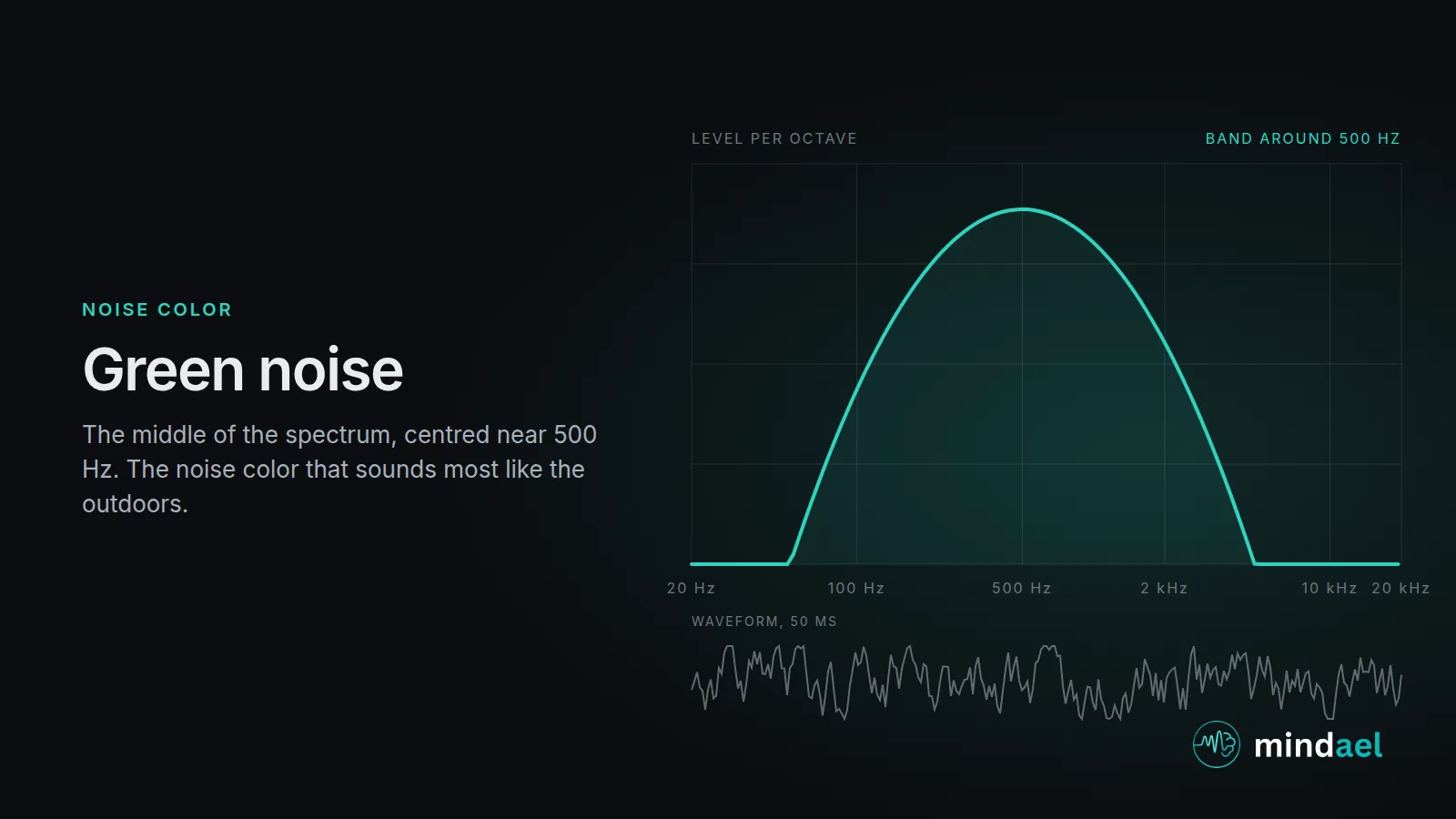
Green noise is a noise color with the lows and highs trimmed, leaving a band in the middle where most natural ambience lives. It sounds like a soft outdoor hum, less heavy than brown and less sharp than white, and people use it for sleep and for calm work.
Choosing an app? See what the best brown noise app needs, or browse the full sound library.
What green noise is
Green noise is not one of the classic mathematically defined colors; it is a practical one. Take broadband noise, roll off the lows that make brown noise feel heavy and the highs that make white noise feel sharp, and what is left is a soft band around 500 Hz. That band happens to be where most of the energy of a forest, a meadow or a distant shoreline sits, which is why green noise is often described as the sound of nature with nothing in particular in it. In Mindael it is generated in our studio alongside the other colors and shaped to that band.
When to use it
Sleep. If brown noise feels like a weight on the room and pink still has a touch of hiss, green is the next thing to try. The research on steady noise and sleep comes from white and pink, where broadband sound shortened time to fall asleep in a noisy setting (Messineo et al., 2017) and pink noise pulses deepened slow-wave sleep (Ngo et al., 2013); green is the same kind of steady sound, tuned to be easier on the ear.
Calm work. Reading, light admin, anything where brown feels too dark. Green sits in the background without asking for attention.
Winding down. Its outdoor character makes it a natural bed for a theta beat or a breathing exercise in the evening.
How to listen
Low, on a speaker. Green noise is subtle, so the temptation is to turn it up; resist it. Layer it under gentle rain if you want texture, and compare it with brown noise on two consecutive nights to find your color.
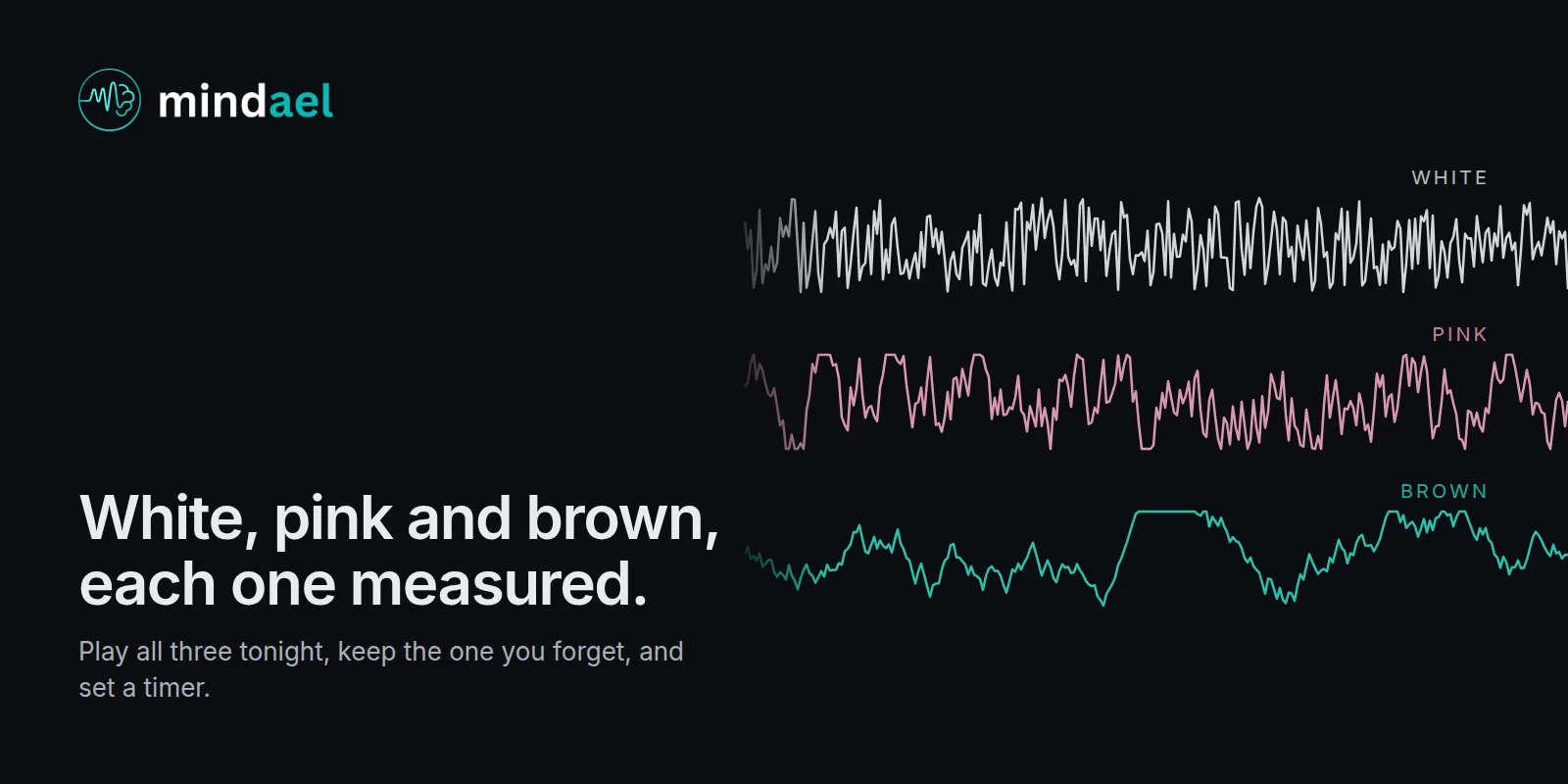
The full noise family, with the spectrum of each, is explained in brown noise vs white noise vs pink noise.
The outdoors, with nothing in it.
Green noise is the color people choose when every other noise feels like too much. Mindael's version is generated in our studio with the band centred where natural ambience sits, so it feels like a window left open rather than a machine. Download it and try it under rain tonight.
- Green, velvet, grey, blue and violet noise alongside the big three
- Mix green with rain or a theta beat
- Timer, offline playback, no account needed
 Free · No account needed · Works offline
 Frequently asked questions
What is green noise?
A noise color with its energy concentrated in the middle of the hearing range, around 500 Hz, with the low rumble and high hiss reduced. It is often described as the ambient sound of nature with no single source in it.
Is green noise good for sleep?
Many people find it the most comfortable color for a full night because it has neither the weight of brown nor the edge of white. There is no sleep study on green noise specifically; the evidence for steady noise and sleep comes from white and pink, and green is the same kind of sound.
Green noise vs brown noise?
Brown is deeper and more physical; green is lighter and more open. If brown feels like it presses on you, green is the next thing to try.
Does green noise help with anxiety?
A steady, familiar sound gives an anxious nervous system fewer things to react to, and green noise is one of the least intrusive colors. Pair it with slow breathing; the sound sets the pace.
Sources
- Messineo L, et al. Broadband sound administration improves sleep onset latency in healthy subjects in a model of transient insomnia. Frontiers in Neurology, 2017.
- Ngo HV, Martinetz T, Born J, Mölle M. Auditory closed-loop stimulation of the sleep slow oscillation enhances memory. Neuron, 2013.
This page is for general information and is not medical advice.