

White Noise: The Bright, Even Sound That Masks a Noisy Room
Random noise, equal energy at every frequency
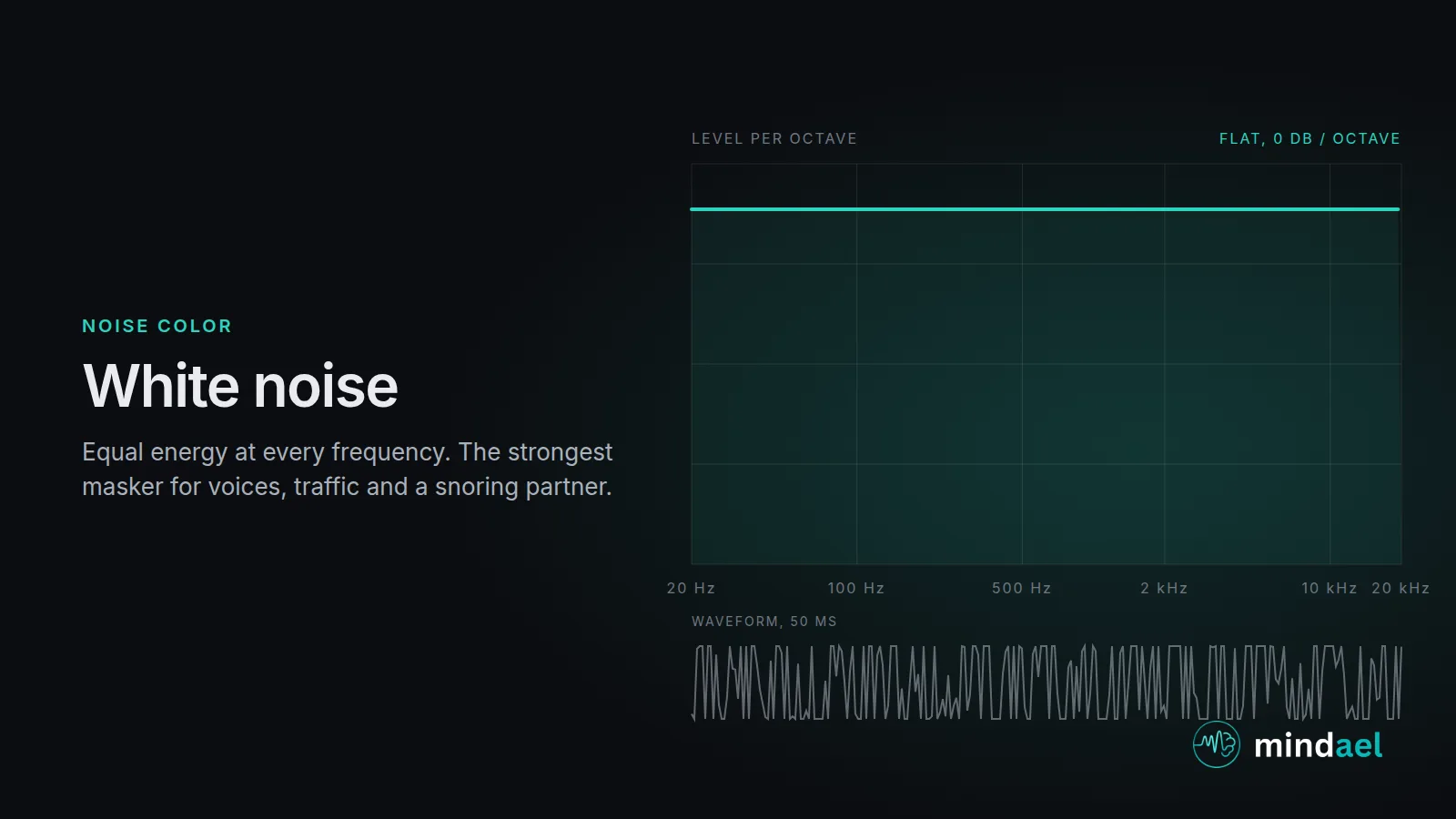
White noise is the bright, hissy member of the noise family, like radio static or a fan on high. It is the best sound for covering sudden noises from outside, and the color the sleep and ADHD research has used most, but it can feel sharp over long sessions.
Choosing an app? See what the best brown noise app needs, or browse the full sound library.
What white noise is
White noise contains every audible frequency at the same level. Because our ears are more sensitive to high frequencies, it sounds bright and hissy, like radio static, heavy rain on a tin roof, or a fan turned up. That evenness is its strength: whatever frequency a disturbance arrives at, white noise already has energy there to blur it. The version in Mindael is generated in our studio and measured flat before release.
When to use it
A loud bedroom. Traffic, a snoring partner, a hotel corridor. White noise is the strongest masker of the three main colors, and the one the sleep research used. In a 1990 hospital study, 80% of newborns fell asleep within five minutes with white noise playing, against 25% without it (Spencer et al., 1990). In adults in a simulated noisy night, steady broadband sound cut the time to fall asleep by 38% (Messineo et al., 2017).
Attention. The Swedish ADHD studies used white noise and found that children with attention problems remembered more with it playing (Söderlund et al., 2007). For a short, sharp block in a noisy café, it works. For a whole afternoon, most people move to pink or brown.
How to listen
Lower than feels natural. The only real caution in the literature is about level: some infant sleep machines exceeded safe output at maximum volume (Hugh et al., 2014). Keep it at a quiet conversation, 40 to 50 dB, and use a speaker rather than earbuds overnight; for babies, the white noise for babies guide has the measuring routine. If it feels sharp after an hour, mix in ocean waves or move one step down the ladder to pink noise.
We compare all three colors, with a decision guide, in brown noise vs white noise vs pink noise.
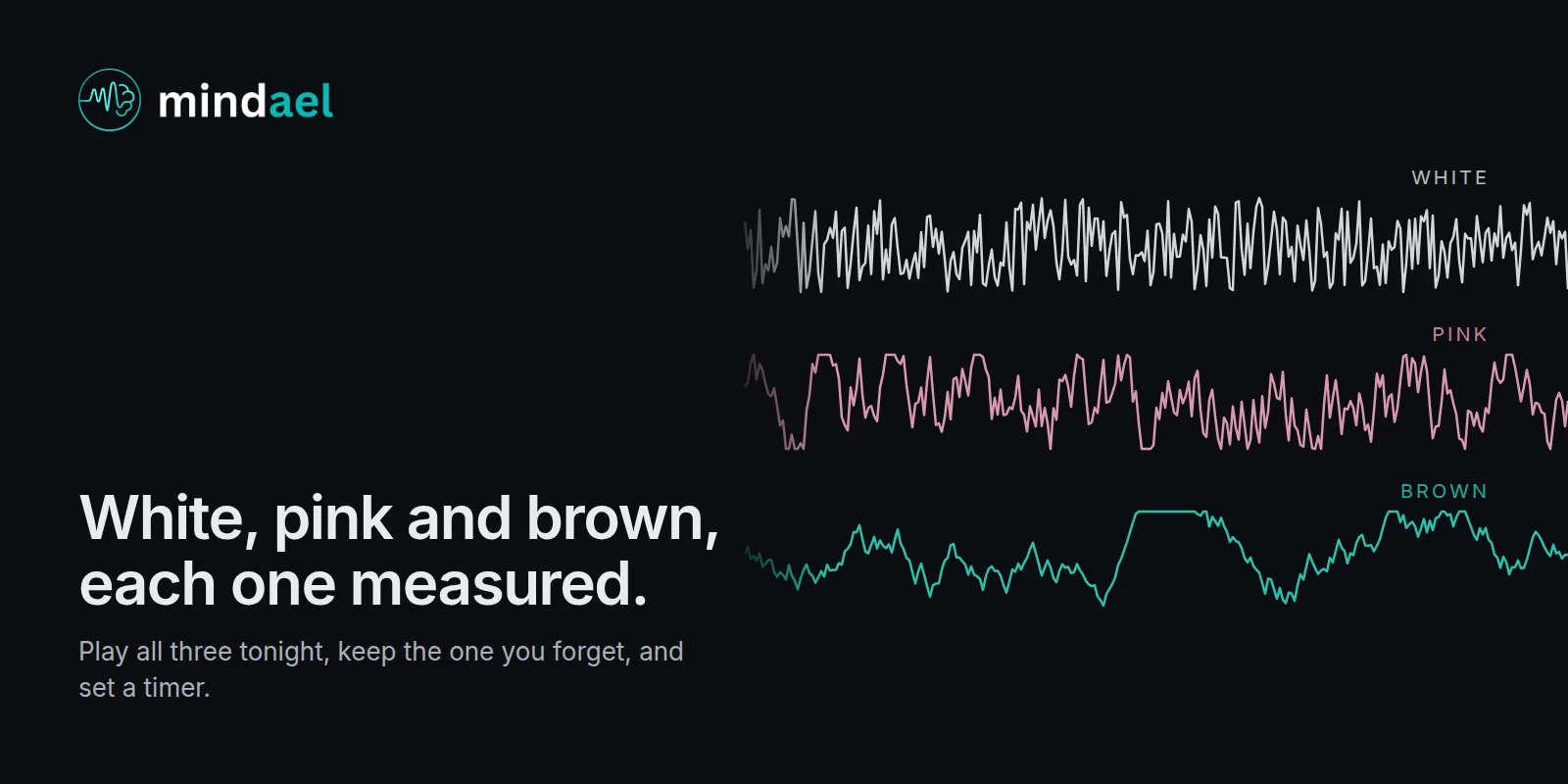
White noise, measured flat.
A white noise track is only white if its spectrum is actually flat, and most online tracks are not. The one in Mindael is generated in our studio and checked before release, so it covers what it is supposed to cover. Download it tonight and set a timer.
- White, pink and brown noise, each measured to spec
- Mix white with ocean or rain to soften it
- Timer, offline playback, no account needed
 Free · No account needed · Works offline
 Frequently asked questions
What is white noise?
A random sound with equal energy at every frequency the ear can hear. The name comes from white light, which contains every color in equal measure. It sounds like static or a strong fan.
Is white noise good for sleep?
For a noisy room, it is the best of the colors. In a 1990 study, 80% of newborns fell asleep within five minutes with white noise, against 25% without it, and a 2017 study found steady broadband sound cut adult sleep onset by 38% in a noisy setting.
Is white noise safe all night?
At a low volume, yes. A 2014 study found some infant sleep machines could exceed safe levels at maximum volume, so keep it around a quiet conversation and place the speaker away from the bed.
White noise or brown noise?
White masks sharp sounds better; brown is easier to listen to for hours. If the street is loud, start with white. If the room is quiet and your mind is not, start with brown.
Sources
- Spencer JA, Moran DJ, Lee A, Talbert D. White noise and sleep induction. Archives of Disease in Childhood, 1990.
- Messineo L, et al. Broadband sound administration improves sleep onset latency in healthy subjects in a model of transient insomnia. Frontiers in Neurology, 2017.
- Söderlund G, Sikström S, Smart A. Listen to the noise: noise is beneficial for cognitive performance in ADHD. Journal of Child Psychology and Psychiatry, 2007.
- Hugh SC, et al. Infant sleep machines and hazardous sound pressure levels. Pediatrics, 2014.
This page is for general information and is not medical advice.