

Theta Binaural Beats (4 to 8 Hz): The Wind-Down and Meditation Rhythm
Binaural beat, 4 to 8 Hz difference (4, 6 and 7.5 Hz in the app)
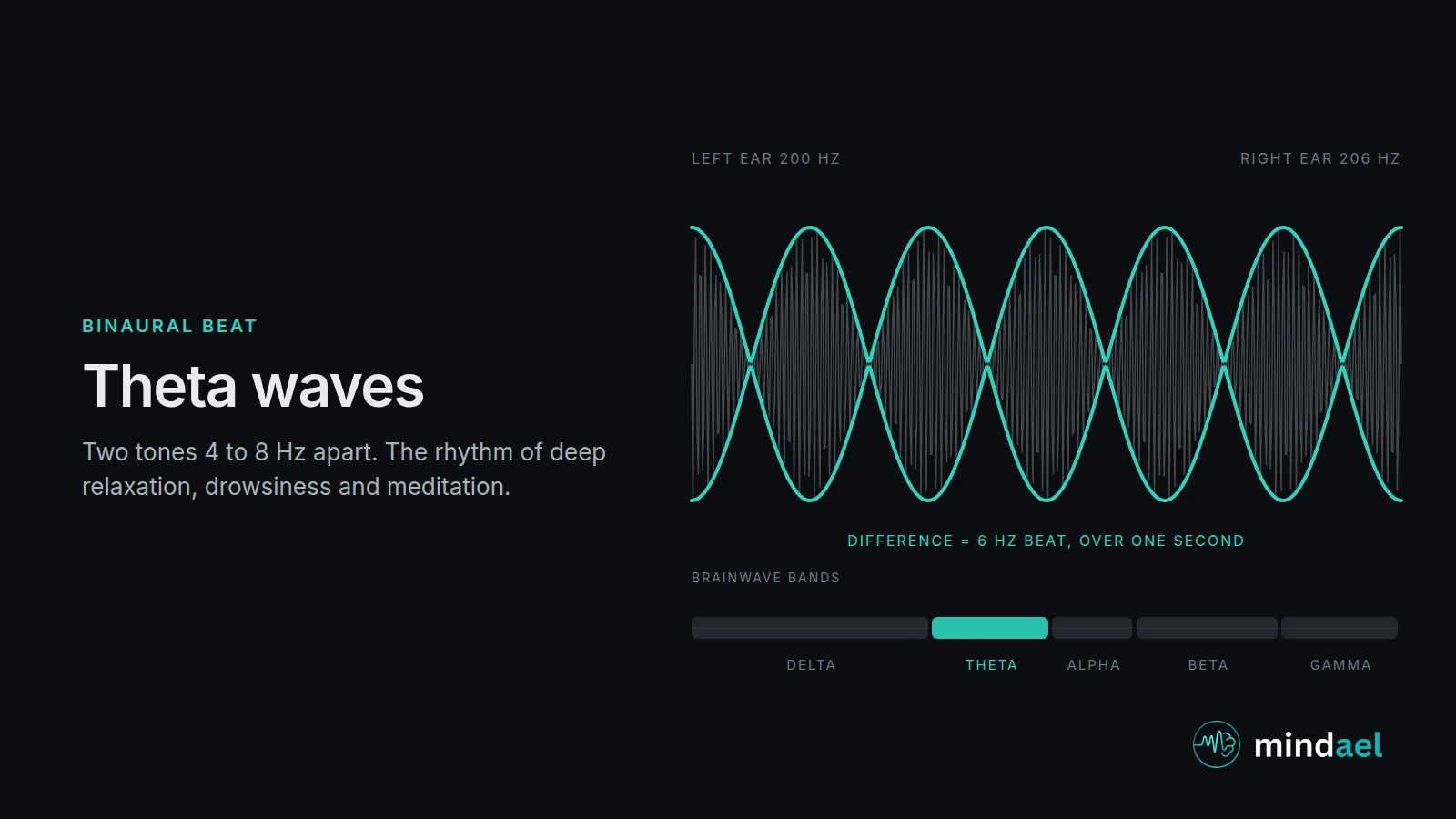
Theta is the 4 to 8 Hz band, the rhythm of deep relaxation, drowsiness and experienced meditators. A theta binaural beat is the sound with the clearest brain research for calming down: a 6 Hz beat raised theta activity within about ten minutes in a 2017 study. It is the beat for the evening and for a seated sit.
Choosing an app? See what the best binaural beats app needs, or browse the full sound library.
What a theta beat is
Two tones a few hertz apart, one per ear, and the brain hears the difference as a slow pulse. When that difference sits between 4 and 8 Hz, it matches theta, the rhythm the brain settles into in deep relaxation, in the drowsy minutes before sleep, and in long-practised meditators during a sit. The theta beats in Mindael are generated at 4, 6 and 7.5 Hz over a clean carrier.
What the research shows
Theta has the most direct brain evidence of any band. Participants listened to a 6 Hz binaural beat for 30 minutes while their brain activity was recorded, and theta rose across the whole brain and especially at the front, with the change visible within about ten minutes (Jirakittayakorn and Wongsawat, 2017). For how that feels, the anxiety studies are the guide: patients who listened to binaural beats before surgery reported a 26% drop in anxiety against 11% for the same music without beats (Padmanabhan et al., 2005), and a 2019 meta-analysis of 22 studies found a reliable effect on anxiety, larger with longer sessions (Garcia-Argibay et al., 2019).
How to listen
Earbuds, a 6 Hz beat, rain or ocean over it at about twice its volume, and fifteen to twenty minutes. Slow the exhale to the rain. For meditation, swap rain for a low drone and treat the beat as the thing you return to; our meditation sounds page builds three sessions this way. If the evening ends in bed, step down to a delta beat and let the timer finish.
All five bands and what each is for are in our guide to binaural beats.
Ten minutes to theta, with rain over it.
A 6 Hz beat under rain for fifteen minutes is the evening routine our listeners write to us about most. Mindael has theta at 4, 6 and 7.5 Hz with a clean carrier, rain and ocean to put over it, a breathing guide, and a timer. Earbuds in, breathe out longer, and let it build.
- Theta 4, 6 and 7.5 Hz beats with a clean carrier
- Layer under rain, ocean or a solfeggio tone
- Breathing guide and timer, works offline
 Free · No account needed · Works offline
 Frequently asked questions
What do theta binaural beats do?
They give the brain a 4 to 8 Hz pulse to follow, the rhythm associated with deep relaxation and meditation. In a 2017 study, listening to a 6 Hz beat for 30 minutes raised theta activity across the brain, with the effect visible within about ten minutes.
Which theta frequency should I use?
6 Hz is the one with the study and the one we suggest first. 4 Hz sits near the delta edge and suits the last minutes before sleep; 7.5 Hz is lighter and is the beat in the real evening mix on our ocean page.
Is theta good for anxiety?
A 2005 surgical trial found binaural beats cut pre-operative anxiety by about a quarter, and a 2019 meta-analysis found a reliable effect on anxiety across 22 studies. Theta and alpha are the bands those studies mostly used.
Do I need headphones?
Yes. A binaural beat only exists when each ear gets its own tone.
Sources
- Jirakittayakorn N, Wongsawat Y. Brain responses to a 6-Hz binaural beat: effects on general theta rhythm and frontal midline theta activity. Frontiers in Neuroscience, 2017.
- Padmanabhan R, Hildreth AJ, Laws D. A prospective, randomised, controlled study examining binaural beat audio and pre-operative anxiety in patients undergoing general anaesthesia for day case surgery. Anaesthesia, 2005.
- Garcia-Argibay M, Santed MA, Reales JM. Efficacy of binaural auditory beats in cognition, anxiety, and pain perception: a meta-analysis. Psychological Research, 2019.
This page is for general information and is not medical advice.