

528 Hz Solfeggio Frequency: The Love Frequency, and the One With a Study
Pure tone at 528 Hz, solfeggio scale
15 second sample of the 528 Hz tone in Mindael, generated at exactly 528 Hz.
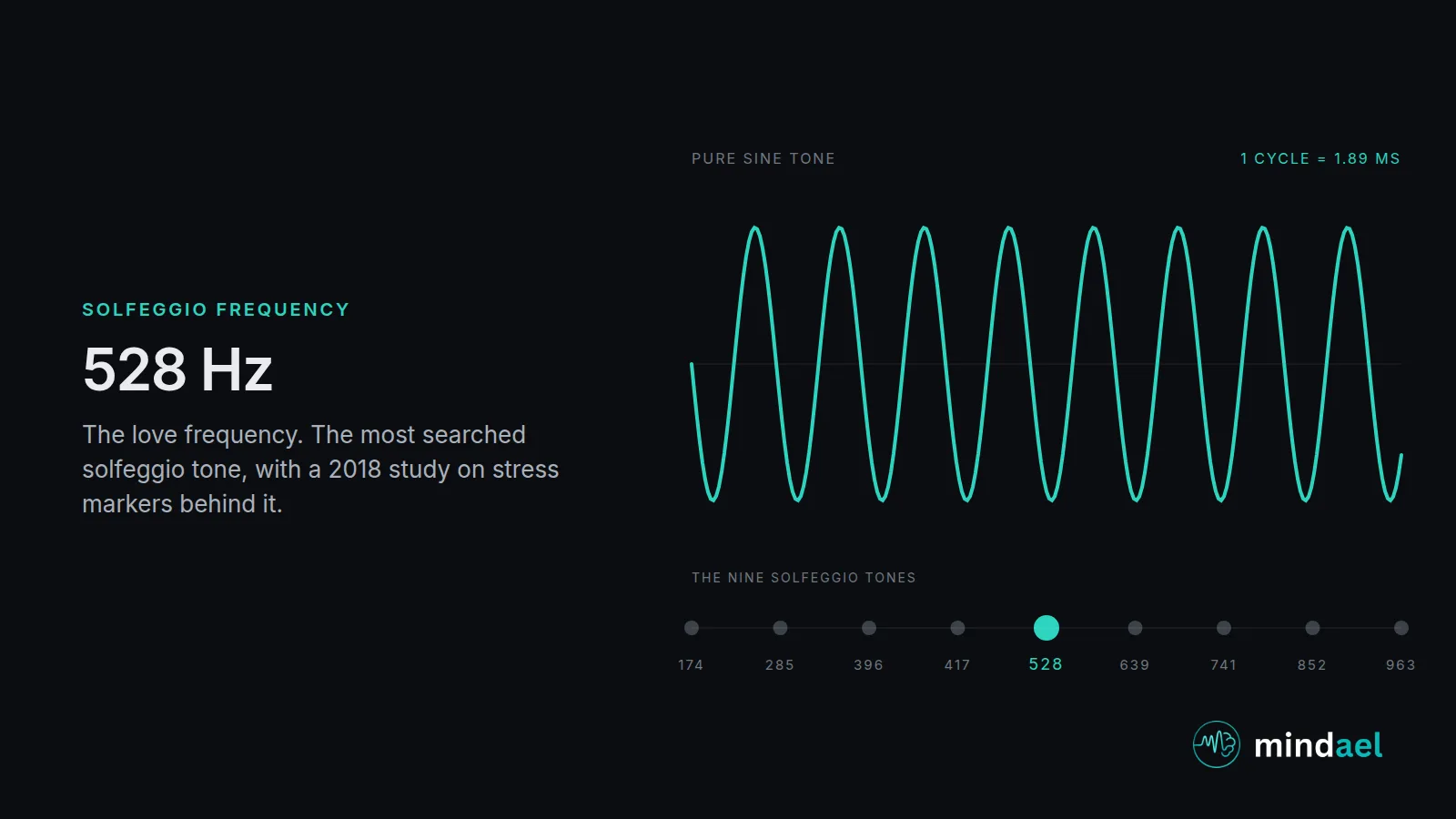
528 Hz is the most listened-to solfeggio tone by a wide margin: a warm mid tone near the C above middle C, called the love frequency in the tradition, and the one tone with a published study, where five minutes of music at 528 Hz lowered stress markers compared with standard tuning.
Choosing an app? See a free alternative to Calm for relaxation, or browse the full sound library.
What 528 Hz is
528 Hz is the middle tone of the original six and the best known of all nine. As a pitch it sits close to C5, the C above middle C: warm, clear and easy to hum. In Mindael it is generated as a pure tone at exactly 528 Hz, which matters more for this tone than for any other, because it is the one people check.
What the research shows
528 Hz is the solfeggio frequency with a published study. Researchers played the same piece of music to nine participants at the standard 440 Hz tuning and again shifted to centre on 528 Hz. After five minutes at 528 Hz, the stress hormone cortisol fell and oxytocin rose, with no such change at 440 Hz, and participants reported feeling calmer (Akimoto et al., 2018). It was a small pilot, and we describe it as one, but it is a real result in the direction people expect.
What it is used for
The tradition calls 528 Hz the love frequency and pairs it with transformation. Our listeners use it for three things: coming down after stress, the evening wind-down, and as the tone under a seated meditation. It is not a focus sound; for that, brown noise and a beta beat do the job better.
How to listen
Under rain, ocean or a drone at about a third of their volume, for fifteen to twenty minutes. A speaker is fine. If you have earbuds, a theta 6 Hz beat underneath makes a complete evening session. Give it a week before judging; the settling effect builds with familiarity.
The nine tones, the history and the full discussion of the study are in our guide to solfeggio frequencies.
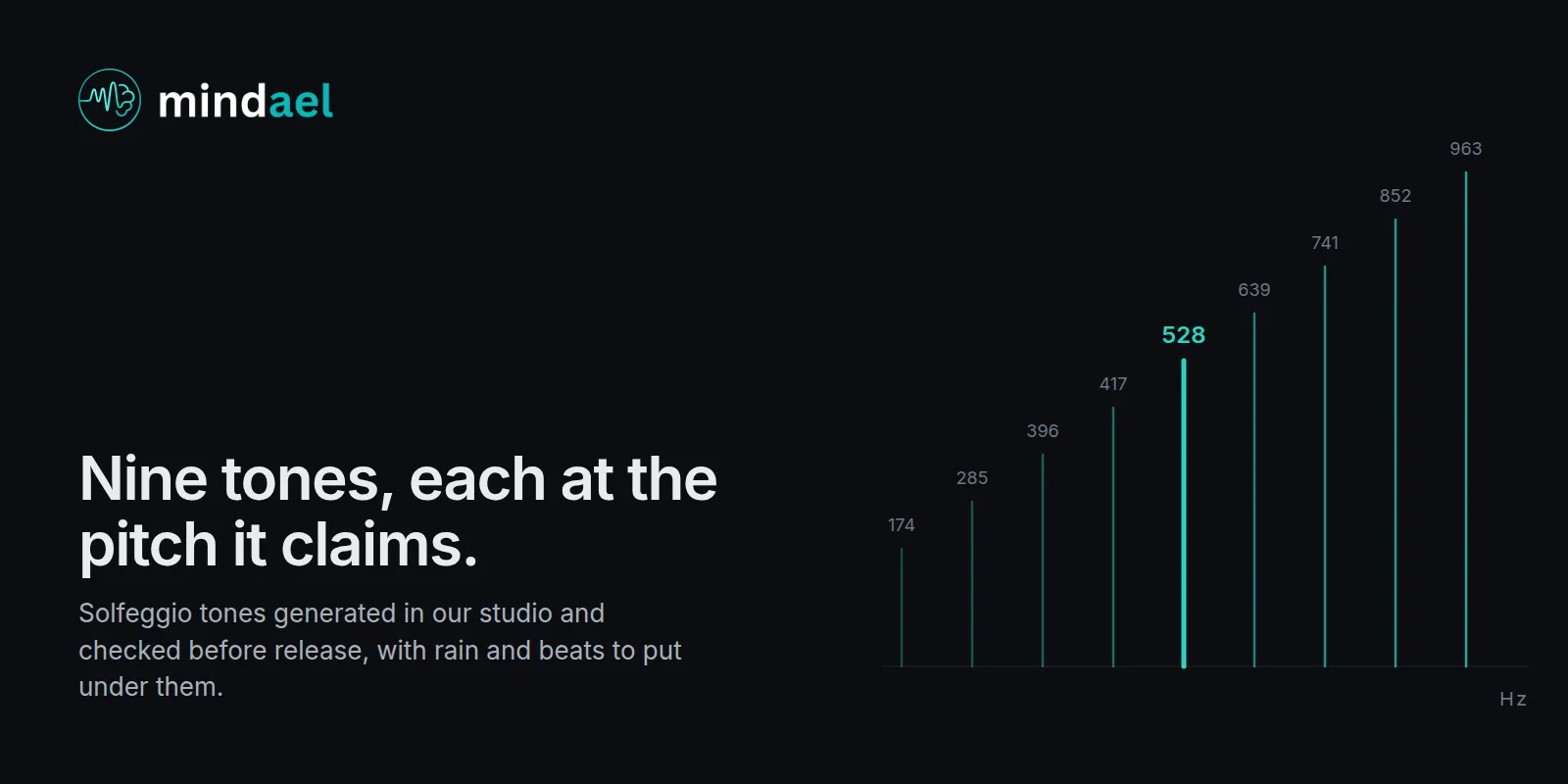
528 Hz that is actually 528 Hz.
A 528 Hz track that is really 522 Hz is just a different note. Mindael generates the tone at exactly 528 Hz and checks it before release, so the sample you just heard is the sound you get. Download it, slide rain underneath, and give it the five minutes the study used.
- All nine solfeggio tones, pitch-accurate and studio-made
- Layer 528 Hz under rain, ocean or a theta beat
- Timer with a gentle fade, works offline
 Free · No account needed · Works offline
 Frequently asked questions
What is 528 Hz good for?
It is traditionally associated with transformation and calm, and it is the solfeggio tone with research: a 2018 pilot found five minutes of music at 528 Hz lowered cortisol and raised oxytocin compared with the same music at 440 Hz. People use it for stress, winding down and meditation.
Why is 528 Hz called the love frequency?
The name comes from the modern solfeggio tradition, which paired 528 Hz with transformation, repair and love. It is a tradition rather than a measurement, but the name stuck and it is the tone most people try first.
What does 528 Hz sound like?
A warm, clear mid tone close to C5, the C above middle C. On its own it feels thin after a minute; under rain or a drone it becomes a glow in the mix.
Do I need headphones for 528 Hz?
No. It is a single tone, so a speaker works. Headphones are only needed if you add a binaural beat under it.
Sources
- Akimoto K, Hu A, Yamaguchi T, Kobayashi H. Effect of 528 Hz music on the endocrine system and autonomic nervous system. Health, 2018.
This page is for general information and is not medical advice.