

Autumn Relaxing Music: The Sounds for Darker Evenings, the Clock Change and the Rainy Season
Autumn relaxing music is one of the season's quiet rituals: the evenings close in, the rain comes back, and the body asks for something slower. The sound that suits autumn best is often not music at all but the season itself, steady rain on a window, a slow sea, a soft low hum. This page covers what to play on autumn evenings and why it works, what the clock change does to your sleep, and a simple evening routine for the darker months. The sounds are in Mindael, free to download on the App Store.
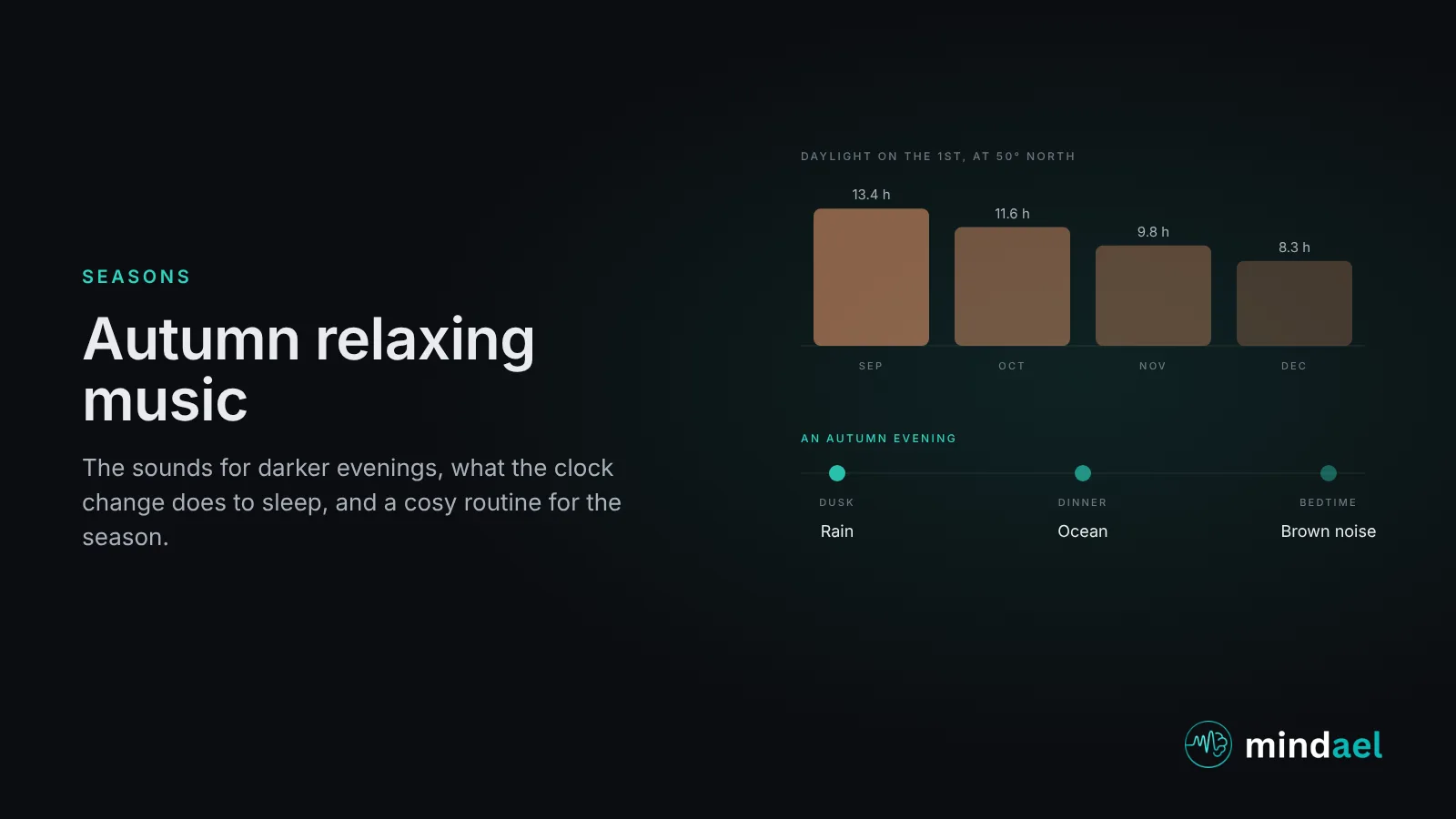
For autumn evenings, choose slow, steady sounds with no words: rain, ocean waves, brown noise or a low drone, at a low volume. A review of 36 studies found natural sounds improved health and mood and lowered stress, with water sounds showing the strongest effects on health. Autumn also shifts sleep: darker mornings push the body clock later, and in a survey of 55,000 people, sleep timing followed the seasonal change in dawn. The clock change in late October or early November is a good moment to reset: get daylight soon after waking, keep the same wake time, and use the same sound every evening as a cue to wind down. If low mood comes back every autumn, talk to a doctor; it is common and treatable.
Sounds that work, and why
Rain
The sound of the season: steady, natural, and the easiest way to make a dark evening feel cosy rather than gloomy.
Ocean waves
A slow swell for winding down after work, slow enough to breathe with: in on the rise, out on the fall.
Brown noise
Deep and soft, for the night: it masks wind, heating and early traffic now that windows are shut and nights are long.
Delta waves
A slow 2 Hz beat under rain in headphones, for the longer nights when you want to fall asleep a little earlier.
Alpha waves
A 10 Hz beat for a grey afternoon: relaxed but awake, for reading or a slow task by the window.
Why autumn asks for slower sound
Autumn changes the evening. The light goes before dinner, the windows close, the rain returns. Many people respond by wanting something slower in the background, and the instinct is a good one. Across a review of 36 studies, natural sounds improved health and mood and lowered stress and annoyance, and water sounds had the strongest effects on health (Buxton et al., 2021). In a lab study, people recovering from a stressful task calmed faster, measured by skin conductance, while listening to nature sounds than to traffic noise at the same volume (Alvarsson et al., 2010).
That is why the best autumn relaxing music is often not music. Rain on a window, a slow ocean and soft brown noise give the room a steady texture with nothing to follow, which is what a tired evening needs.
The clock change and your sleep
Autumn moves the body clock. Light is its main signal, and as dawn comes later the clock tends to drift later with it. In a survey of about 55,000 people, sleep timing on free days followed the seasonal progression of dawn under standard time (Kantermann et al., 2007). When people spent a week camping with only natural light, their body clocks shifted earlier and lined up with sunrise and sunset (Wright et al., 2013).
The practical lesson: daylight soon after waking matters more in autumn than in summer, and so does dim light in the evening. The clock change itself, in late October in Europe and early November in North America, is a useful moment to reset: same wake time, morning light, and a wind-down sound at the same hour every evening. Our morning guide has more on the first hour of the day.
An autumn evening, hour by hour
At dusk. Rain or ocean, low, while you cook or tidy. It marks the end of the working day as the light goes.
After dinner. Lamps instead of ceiling lights. Rain on its own, or ocean for a few minutes of slow breathing. A grey afternoon that needs to stay productive does better with alpha waves under rain.
At bedtime. Brown noise or rain with a delta beat, low and steady, through the night. It masks the wind, the heating clicking on and the early traffic that long nights bring. The sleep sounds guide covers volume and timing in detail, and the relaxing sounds guide has a fifteen-minute routine for a hard evening.
When autumn is more than a mood
Feeling a little slower when the light goes is normal. Low mood, loss of interest and heavy tiredness that come back every autumn are something else, and they are common and treatable. A calming sound can make evenings easier, but it is not a treatment; please talk to a doctor. Mindael is where we keep the sounds of the season: rain, ocean, brown noise and binaural beats made in our studio, free to download.
How to set it up tonight
- Get light earlyTen to twenty minutes outside, or by a bright window, soon after waking. Morning light is what holds the body clock steady as dawn arrives later.
- Pick one evening soundRain or ocean, at a low volume, from dusk. The same sound every evening becomes a cue that the day is over.
- Dim the room with the skyWhen it gets dark outside, lower the lights inside. Lamps instead of ceiling lights, screens dimmer.
- Switch to a night soundAt bedtime, brown noise or rain with a delta beat, low and steady, through the night.
- Keep the wake timeThrough the clock change and the darker weeks, wake at the same time, weekends included.
Rain at dusk. The same rain every evening.
Mindael has rain and ocean recorded without loops, brown noise generated to spec and delta and alpha beats made in our studio, two at a time. Free to download, no account, works offline. The sound of autumn, for the darker evenings.
- Rain, ocean, brown noise and binaural beats, studio-made
- Two sounds at once, fine volume control
- Free to download, no account, works offline
 Free · No account needed · Works offline
Frequently asked questions
What is good relaxing music for autumn?
Slow, steady and wordless. Rain, ocean waves, soft brown noise and low drones suit the season, and many people find them more relaxing than music because there is nothing to follow. Keep the volume low and use the same sound every evening.
Why do rain sounds feel so relaxing in autumn?
Rain is steady and has no surprises, so the brain can stop monitoring it. Natural sounds in general lowered stress and improved mood across many studies, and water sounds had the strongest effects on health. In autumn, rain also matches what is outside the window, which makes the room feel like a shelter.
How does the autumn clock change affect sleep?
Falling back an hour gives most people an easier first night, but the darker evenings and later dawns that follow can shift the body clock. Get daylight soon after waking, keep a steady wake time and dim the lights in the evening to help the body settle into the new schedule.
Why do I feel more tired in autumn?
Shorter days mean less light, and light is the body clock's main signal. Mornings feel harder when dawn is later. Morning light and a regular schedule help. If tiredness comes with low mood that returns every autumn, see a doctor.
What sounds help with sleep on long autumn nights?
Brown noise, rain or a delta beat, low and steady, played through the night. They mask wind, heating and early traffic, which matter more when nights are long and windows are shut.
Can autumn sounds help with seasonal low mood?
A calming sound can make evenings more pleasant, but it is not a treatment. Low mood that returns every autumn and winter is common and treatable, often with light therapy or talking therapy; please talk to a doctor.
Sources
- Buxton RT, et al. A synthesis of health benefits of natural sounds and their distribution in national parks. PNAS, 2021.
- Alvarsson JJ, Wiens S, Nilsson ME. Stress recovery during exposure to nature sound and environmental noise. International Journal of Environmental Research and Public Health, 2010.
- Kantermann T, et al. The human circadian clock's seasonal adjustment is disrupted by daylight saving time. Current Biology, 2007.
- Wright KP, et al. Entrainment of the human circadian clock to the natural light-dark cycle. Current Biology, 2013.
This page is for general information and is not medical advice. If low mood, loss of interest or heavy tiredness return every autumn or winter, please see a doctor; seasonal depression is common and treatable.