
Safe Sleep for Infants: The ABCs, Room Sharing, Swaddling, Pacifiers and Sound Machines
Safe sleep for infants comes down to a short list from the American Academy of Pediatrics' 2022 guidance. Alone, on the Back, in a Crib: put your baby down on their back, for every sleep, on a firm, flat surface with only a fitted sheet, no pillows, bumpers, blankets or toys. Share a room, not a bed, ideally for at least the first six months; in a study of five major case-control studies, bed sharing raised the risk of sudden infant death even when parents did not smoke and the baby was breastfed. Offering a pacifier at sleep time is linked with lower risk. Avoid smoke, alcohol and overheating, stop swaddling once a baby shows signs of rolling, and never let a baby sleep in a car seat, sofa or inclined product. If you use a sound machine, keep it at least two metres from the cot, at a low volume.
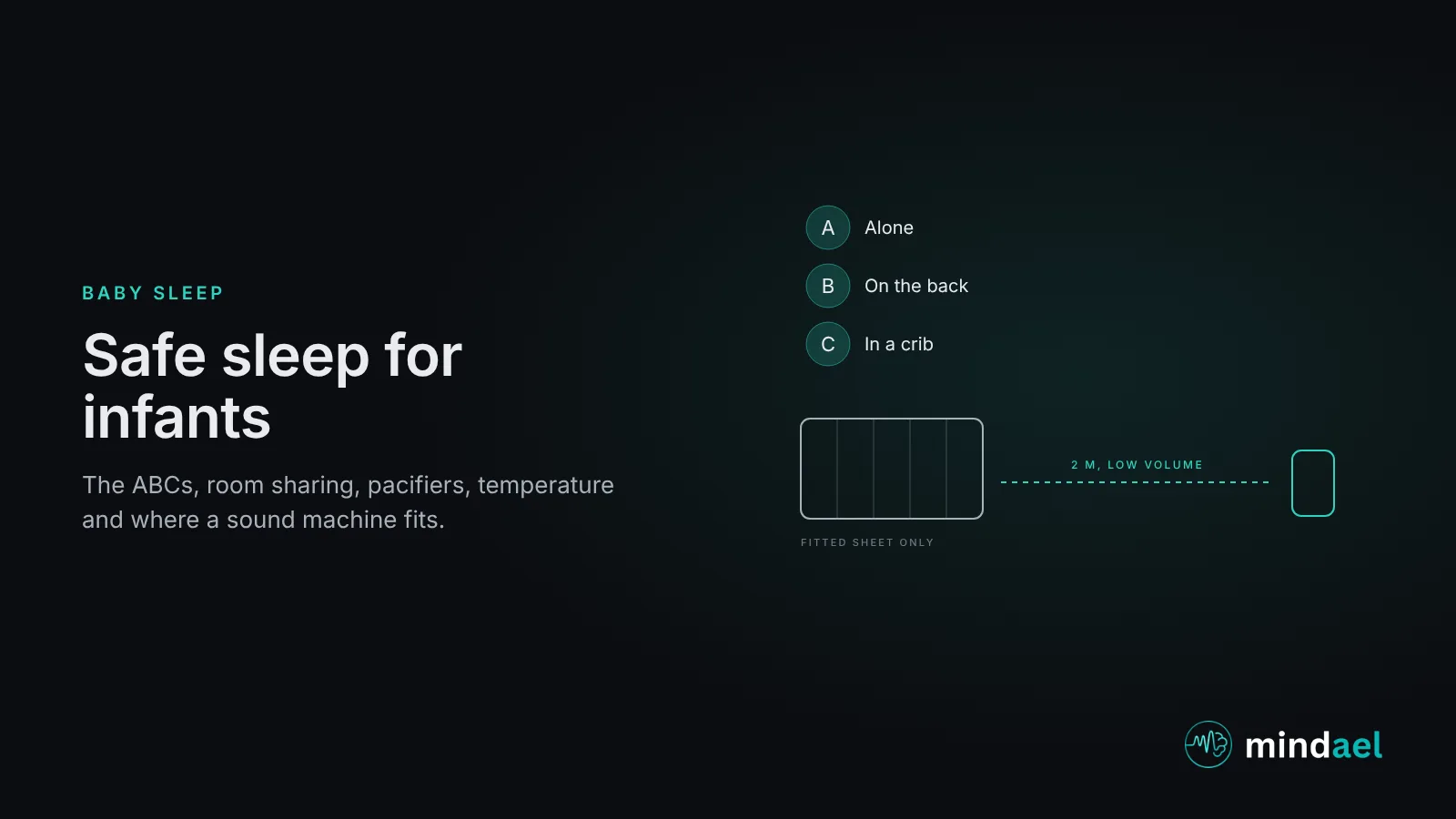
Safe sleep for infants is the one part of baby sleep where the rules are clear and the stakes are high. Most of it fits on a short list, based on the American Academy of Pediatrics’ 2022 guidance. This article goes through each rule, the reason behind it and the questions parents ask most, including where a sound machine fits. We make Mindael, a sound app that many parents use for white noise, free to download on the App Store. Sound can help a baby settle; it does not make sleep safer, and the rules below come first.
The ABCs: alone, on the back, in a crib
Alone. Your baby sleeps in their own sleep space. Nothing else in the cot: no pillows, bumpers, blankets, positioners or soft toys. A fitted sheet is the only thing on the mattress.
On the back. Every sleep, day and night, until your baby’s first birthday. Once your baby can roll both ways on their own, you do not need to turn them back, but always put them down on their back.
In a crib. A crib, bassinet or play yard that meets current safety standards, with a firm, flat mattress. Not a sofa, armchair, adult bed, car seat, swing or any inclined sleeper (Moon et al., 2022). If your baby falls asleep in a car seat or carrier, move them to a flat surface when you can.
Room sharing, not bed sharing
The guidance recommends keeping your baby’s cot in your room, ideally for at least the first six months. It makes night feeds easier and is linked with lower risk.
Bed sharing is different. An analysis that combined five major case-control studies found that, for babies under three months, bed sharing raised the risk of sudden infant death even when neither parent smoked, the mother did not drink and the baby was breastfed (Carpenter et al., 2013). The absolute risk stayed low, but it was higher than room sharing. Smoking, alcohol, drugs and sleeping on a sofa with a baby raise it sharply.
Feeding in bed is fine. If you might fall asleep, keep the bed clear of pillows and covers near the baby, and move them back to their own space when you wake.
Pacifiers
Offering a pacifier when you put your baby down to sleep is linked with a lower risk of sudden infant death. A meta-analysis of case-control studies found the association was strong enough for its authors to recommend offering one at sleep time (Hauck et al., 2005). If you breastfeed, wait until feeding is well established. Do not force it, do not reinsert it once your baby is asleep, and never hang it on a cord.
Temperature and swaddling
Overheating is a risk. Keep the room comfortable for a lightly dressed adult; many health services suggest roughly 16 to 20°C. Dress your baby in one more layer than you would wear, use a sleep sack rather than loose blankets, and skip hats indoors. Check the back of the neck or chest for sweat, not the hands.
Swaddling can calm young babies, but only on their back and only until they show signs of rolling, often around two to three months. Hips should be able to move, and weighted swaddles and sacks are not recommended.
Smoke, alcohol and the rest
Keep your baby’s environment smoke-free during pregnancy and after. Breastfeeding, where possible, is linked with lower risk. Keep up with check-ups and vaccinations. And give plenty of supervised tummy time while your baby is awake, which helps their neck and shoulders and keeps the back of the head round.
Where a sound machine fits
A steady sound can help some babies settle and cover household noise. In a small early study, most newborns played white noise fell asleep within five minutes, far more than without it (Spencer et al., 1990), and our newborns and sleep article covers what is normal in the first months. But it is a comfort, not a safety measure.
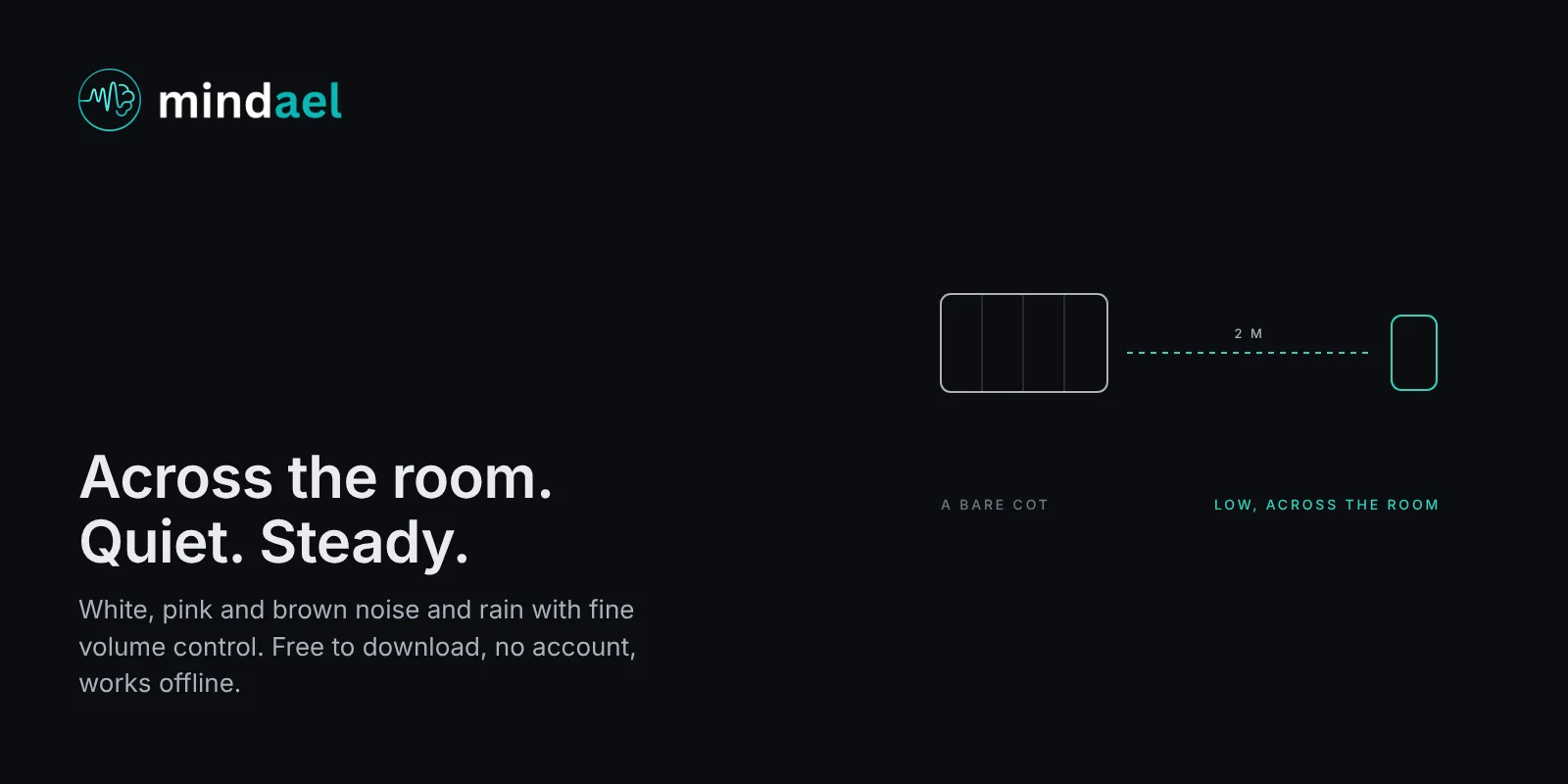
Distance and volume matter. In a study of infant sleep machines, every machine could exceed recommended nursery noise limits at maximum volume and close range (Hugh et al., 2014). Keep the machine or phone at least two metres from the cot, never inside it or on the rail, at the lowest volume that works. Pink or brown noise is softer than white noise for many babies; our white, pink and brown noise guide explains the difference, and our white noise device guide compares machines and apps. The full routine is in our baby sleep sounds guide.
The short version
Alone, on the back, in a bare crib, in your room for the first six months. No bed sharing, sofas, inclined sleepers or car seats for sleep. Offer a pacifier, avoid smoke and overheating, and stop swaddling at the first signs of rolling. If you use a sound machine, keep it two metres away and low. For a steady, low sound you can control finely, Mindael is free to download on the App Store.
Across the room. Quiet. Steady.
Mindael has white, pink and brown noise generated to spec and rain recorded without loops, with fine volume control, so you can keep the sound low and the phone across the room. Free to download, no account, works offline. Sound is a comfort, not a safety measure: the ABCs come first.
- White, pink and brown noise and rain, studio-made
- Fine volume control for a low nursery level
- Free to download, no account, works offline
 Free · No account needed · Works offline
Frequently asked questions
What are the ABCs of safe sleep for infants?
Alone, on the Back, in a Crib. Your baby sleeps alone in their own sleep space, on their back for every sleep, in a crib, bassinet or play yard with a firm, flat mattress and only a fitted sheet.
Can my baby sleep in my room?
Yes, and it is recommended. Pediatric guidance advises room sharing without bed sharing, ideally for at least the first six months: the baby's own cot or bassinet next to your bed.
Is bed sharing safe if I breastfeed and don't smoke?
The risk is lower than with smoking or alcohol, but not zero. An analysis of five major case-control studies found bed sharing still raised the risk of sudden infant death for babies under three months, even when parents did not smoke, did not drink and breastfed. Bring the baby into your bed to feed, and return them to their own space after.
When should I stop swaddling?
As soon as your baby shows signs of trying to roll, often around two to three months. A swaddled baby who rolls onto their front cannot push up. Always place a swaddled baby on their back, and never swaddle with weighted products.
Are white noise machines safe for babies?
They can be, with distance and a low volume. A study of infant sleep machines found that all of them could exceed recommended nursery noise limits at maximum volume and close range. Keep the machine or phone at least two metres from the cot, never inside it, at the lowest volume that works.
What temperature should a baby's room be?
Comfortable for a lightly dressed adult; many health services suggest roughly 16 to 20°C (61 to 68°F). Dress your baby in one more layer than you would wear, no hats indoors, and check for overheating by feeling the back of the neck or chest, not the hands.
Sources
- Moon RY, et al. Sleep-related infant deaths: updated 2022 recommendations for reducing infant deaths in the sleep environment. Pediatrics, 2022.
- Carpenter R, et al. Bed sharing when parents do not smoke: is there a risk of SIDS? An individual level analysis of five major case-control studies. BMJ Open, 2013.
- Hauck FR, Omojokun OO, Siadaty MS. Do pacifiers reduce the risk of sudden infant death syndrome? A meta-analysis. Pediatrics, 2005.
- Spencer JA, Moran DJ, Lee A, Talbert D. White noise and sleep induction. Archives of Disease in Childhood, 1990.
- Hugh SC, et al. Infant sleep machines and hazardous sound pressure levels. Pediatrics, 2014.
This article is for general information and is not medical advice. Follow your pediatrician's and your local health service's advice for your baby. If your baby has trouble breathing, changes colour, is unusually floppy or hard to wake, seek emergency care.
This article is part of our baby and child sleep guide. Hear the sounds in this article in the Mindael sound library, or see our app comparison checklists.